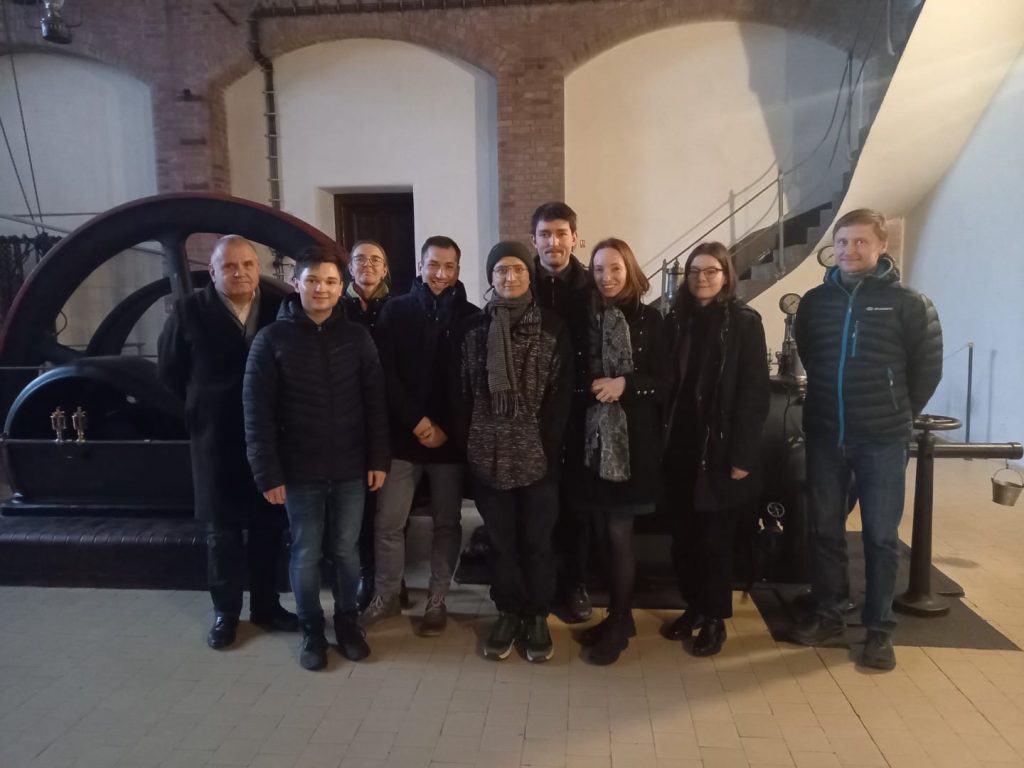
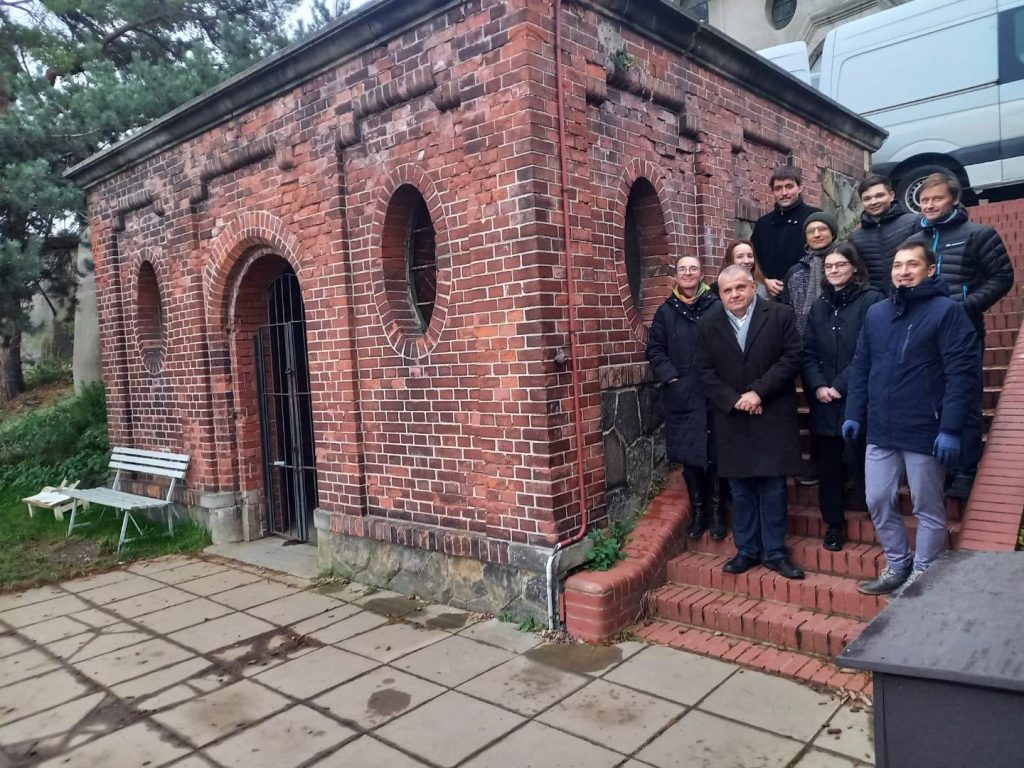
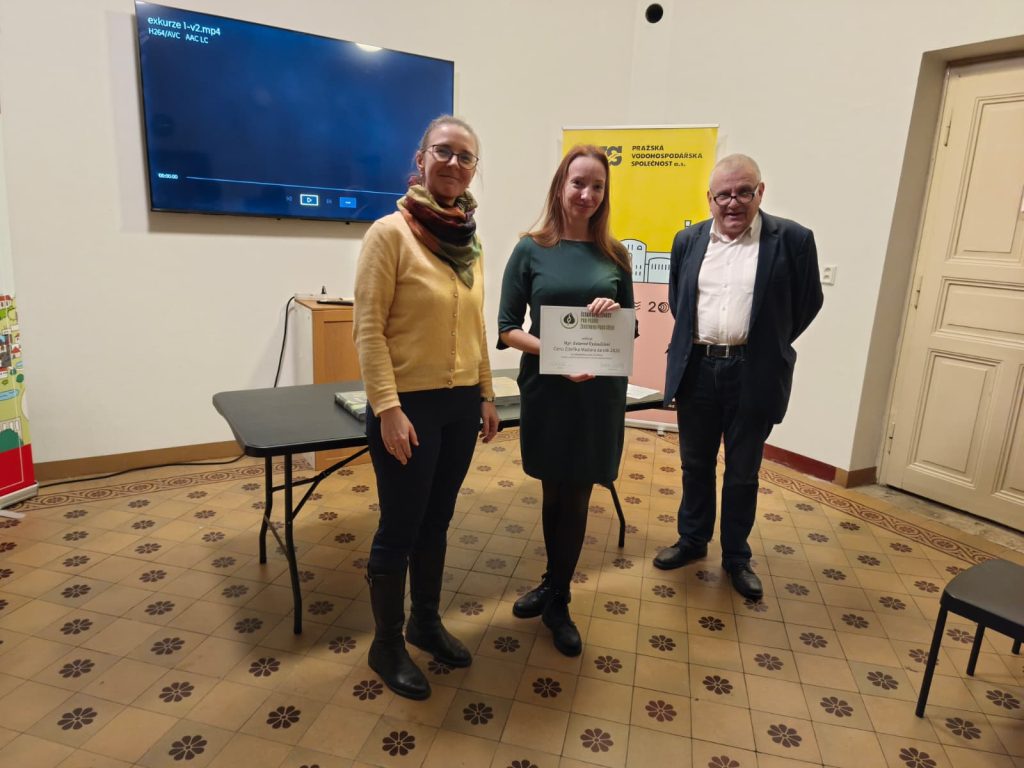
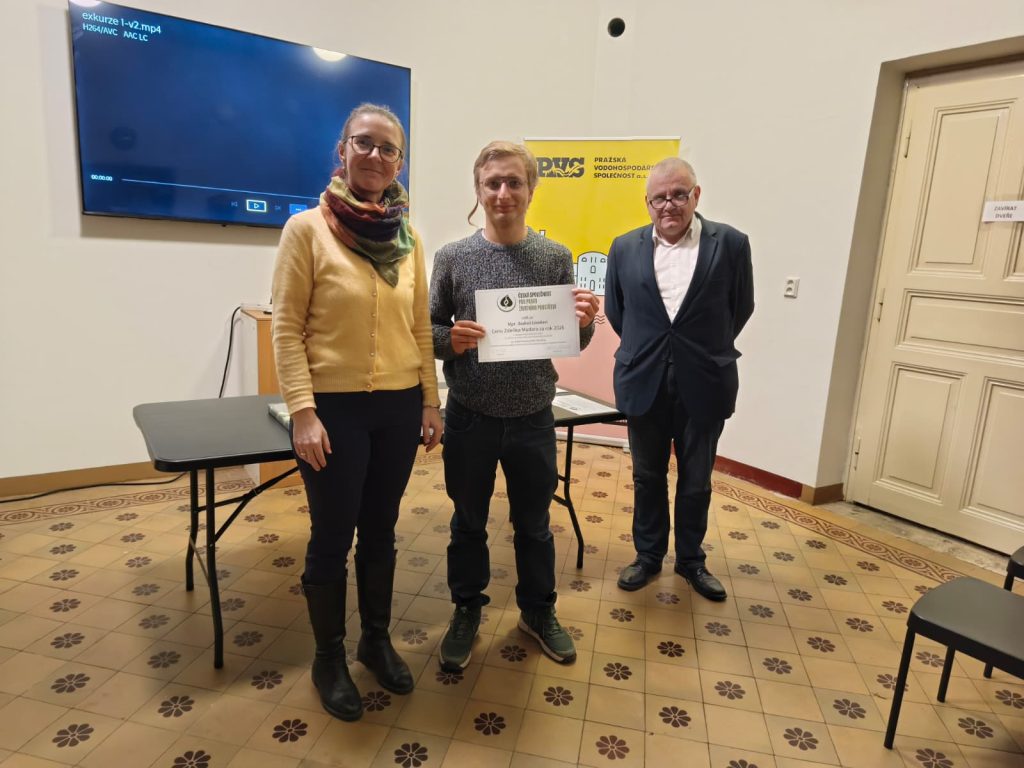
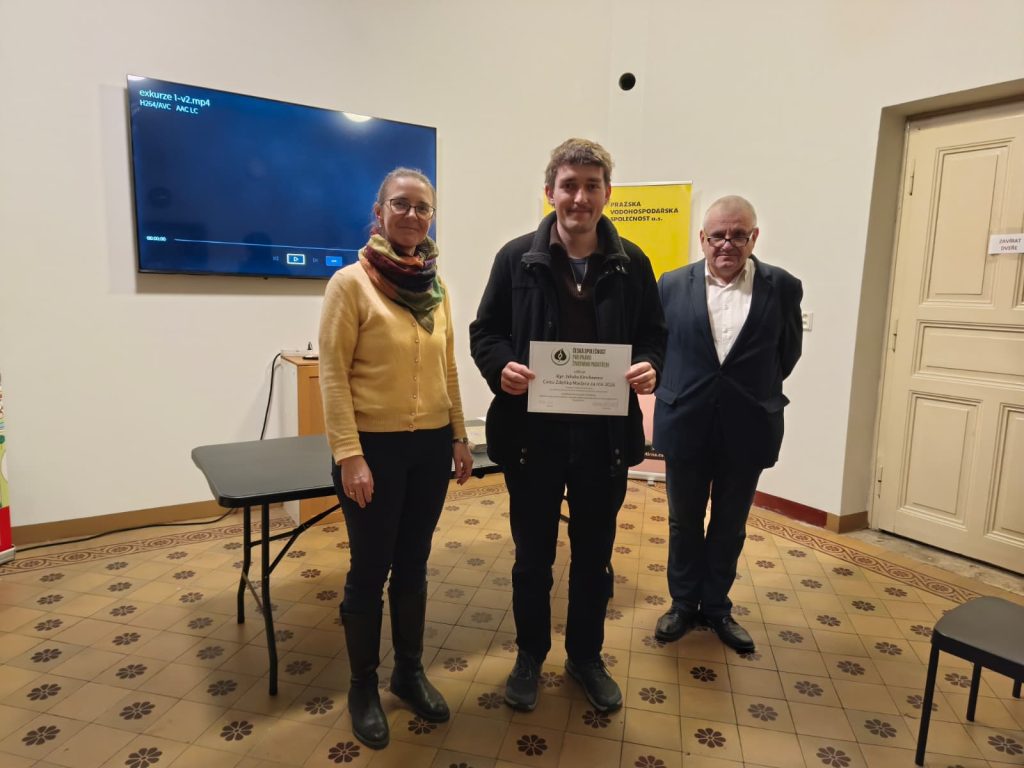
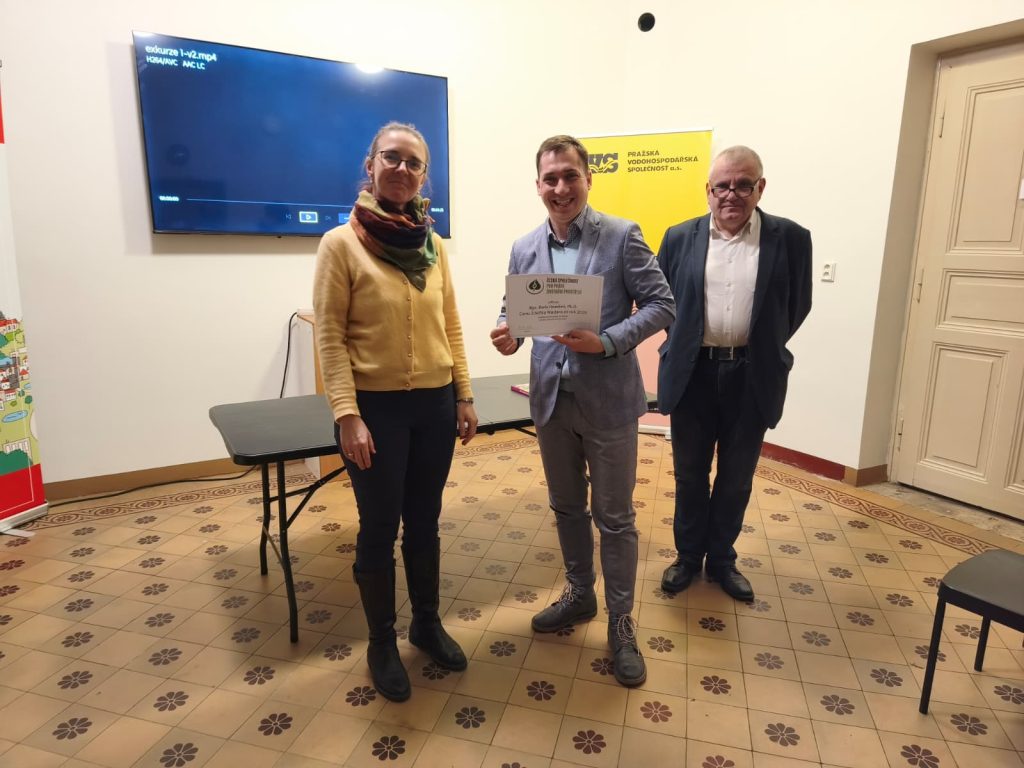
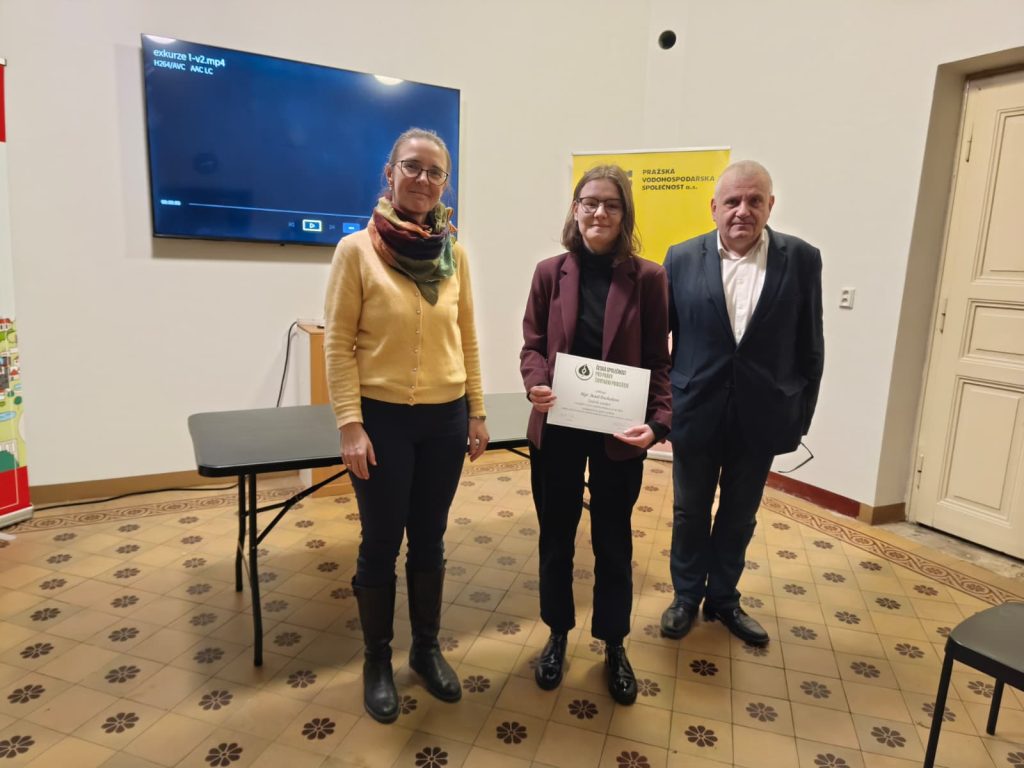
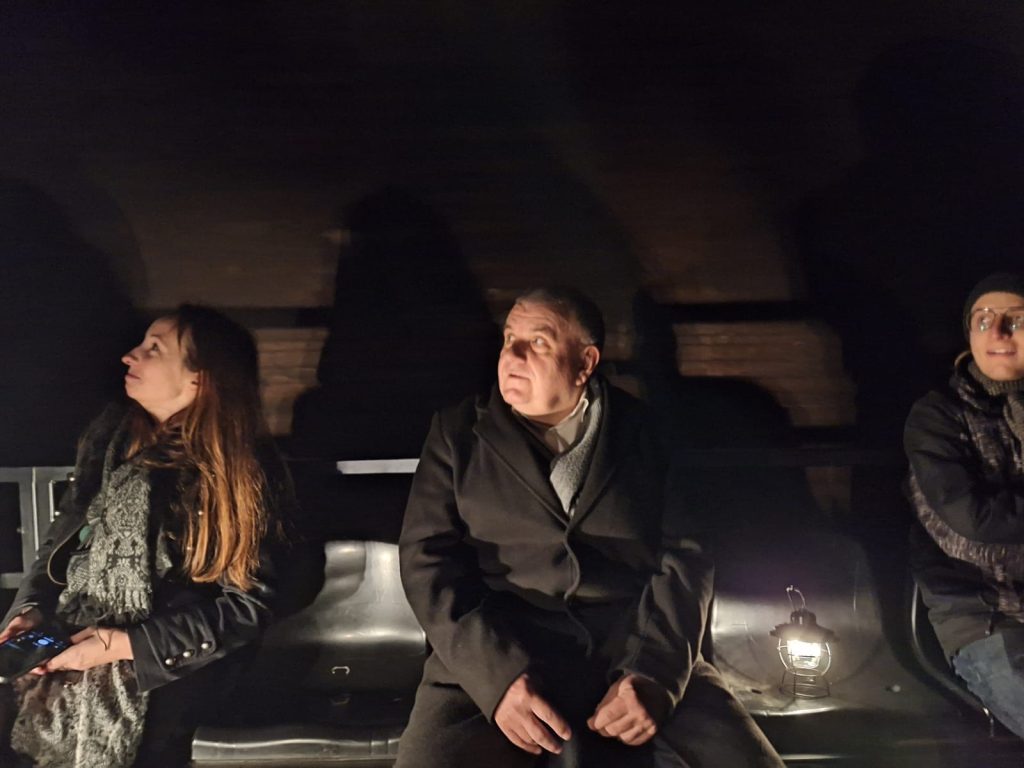
On Friday, 27 November 2026, the award ceremony for participants in the third edition of the Zdeněk Madar Award competition took place at the Old Wastewater Treatment Plant in Prague-Bubeneč. The Czech Society for Environmental Law was represented by its President, Prof. JUDr. Milan Damohorský, DrSc., Vice-President, JUDr. Veronika Tomoszková, Ph.D., and Secretary, JUDr. Jakub Kanický, Ph.D.
The winners received diplomas and books on environmental protection, while the other participants and the supervisors of the submitted dissertations and theses received certificates of recognition. The detailed results of the competition are available here. We would once again like to congratulate all the award recipients.
The ceremony was followed by a guided tour of the wastewater treatment plant, which celebrates its 120th anniversary this year. It began trial operations on 27 June 1906.
The plant was designed by the British engineer Sir William Heerlein Lindley, who was responsible for the design of Prague’s entire sewerage system. Previously, sewage had been discharged onto the streets or directly into the Vltava River without any treatment. Lindley’s gravity-fed sewerage system channelled wastewater to a single location in Bubeneč, where it was treated. It was the first modern municipal wastewater treatment plant in what is now the Czech Republic and the final component of a comprehensive sewerage network.
For this reason, it ranks among the most important structures in Prague’s history. Wastewater no longer posed the same threat to public health or polluted the Vltava through untreated discharges. Designed to serve more than half a million inhabitants, the sewerage system enabled the city to continue growing and remains in use to this day.
The treatment process consisted of three stages, all of which were mechanical. Screens captured coarse debris, which was removed manually. Gravel and sand settled in a grit chamber, while fine sludge settled in ten sedimentation tanks.
The original steam engines dating from 1903 remain operational to this day and are occasionally brought into operation for public demonstrations.
Over time, the plant’s capacity became insufficient. Preparations for the construction of a new Central Wastewater Treatment Plant on Císařský Island began in 1954. The old plant ceased operations in 1967, although its tanks continued to be used for sludge handling until 1983. In the mid-1980s, a group of enthusiasts discovered the abandoned and dilapidated site and began opening it up to the public. In 1991, it was designated a cultural monument, and in 2010, the government granted it the status of a National Cultural Monument. Since 2016, it has been an Anchor Point on the European Route of Industrial Heritage (ERIH). It is also included on the Czech Republic’s Tentative List for nomination for inscription on the UNESCO World Heritage List.
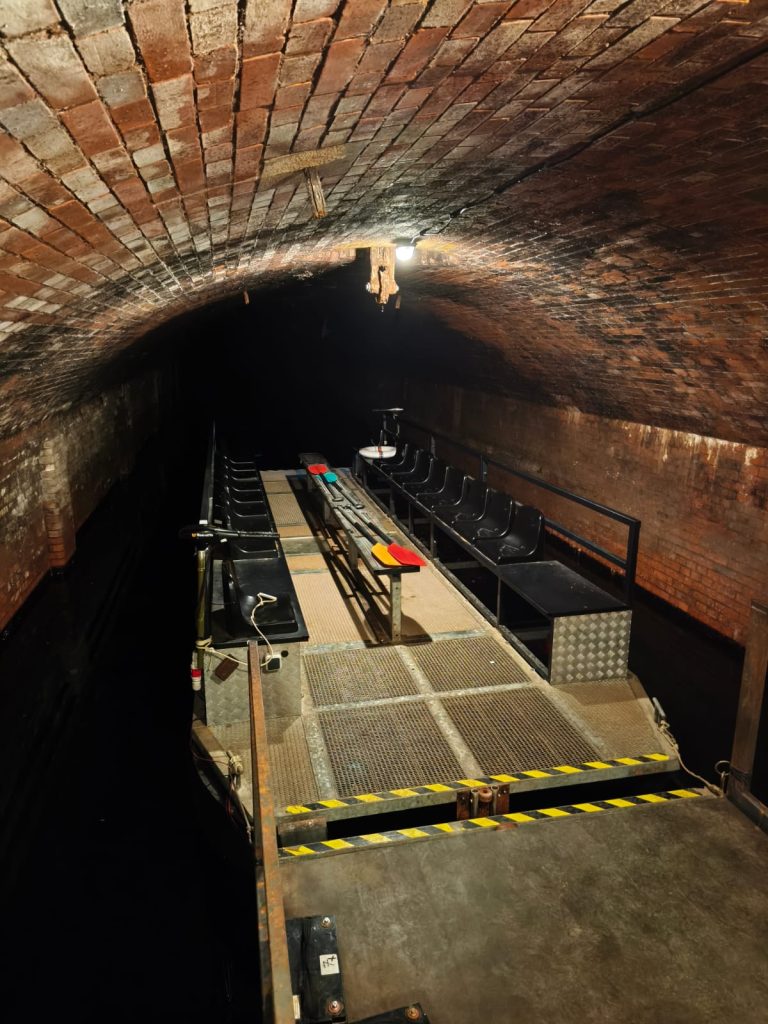
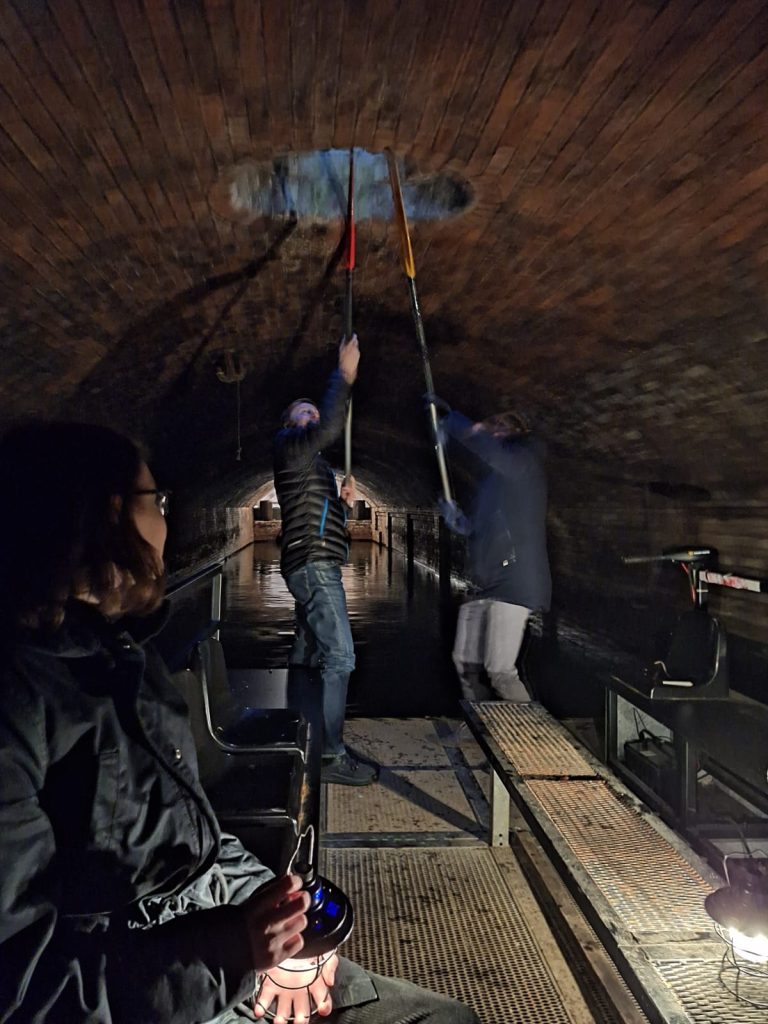
The guided tour included a walk through a disused sewer dating from the late nineteenth century and concluded with a raft trip across an underground sedimentation tank. We propelled the raft ourselves using paddles, navigating in the dark. It was a truly unique experience!
We would like to thank everyone who took part and look forward to our next gathering!